Colorado Springs has a way of reminding us that the calendar does not always control the weather. We can have snow on Monday, sunshine and 55 degrees on Wednesday, and another winter storm rolling in by Friday.
For homeowners, that unpredictable weather can make planning exterior home repairs difficult. It also raises a common question: Can you replace a roof during the winter, or do you have to wait until spring?
The short answer is that roofing work does not automatically stop when temperatures drop. Roofs can be repaired and replaced during colder months, although winter installations require some additional considerations.
And sometimes, waiting until spring simply is not practical.
Why Would Someone Need a Roof Replacement During Winter?
Most homeowners do not plan to replace their roofs in December or January. Spring, summer, and early fall tend to be the more popular seasons for roofing projects.
But roofs do not always fail on a convenient schedule.
Damage From Earlier Colorado Storms
Colorado Springs sees its share of hail, high winds, and severe thunderstorms. Sometimes damage from a summer storm is not discovered until months later.
A homeowner might notice a missing shingle after a windy November afternoon or discover a water stain on the ceiling during the first heavy snowfall.
Other times, a roof replacement was already planned, but insurance paperwork, contractor schedules, or other circumstances pushed the project into winter.
A roof that needs attention in November does not necessarily have to wait until April.
A Leak That Cannot Wait for Spring
There is a difference between a roof that is showing its age and one that is actively allowing water into the house.
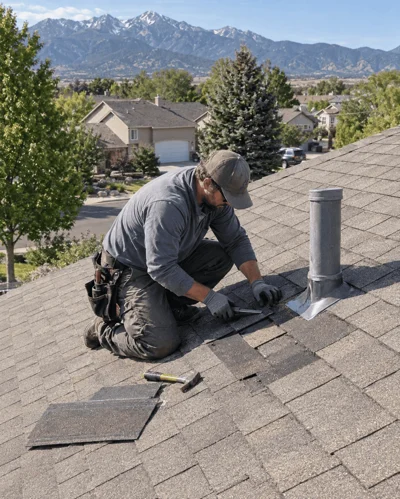
A few worn shingles might warrant monitoring and a future repair. An active leak near a chimney, bathroom vent, or ceiling is a different situation.
Water entering the home can damage insulation, drywall, and interior finishes. During winter, repeated freezing and thawing may complicate an existing moisture problem.
Sometimes a temporary repair is the appropriate solution until conditions improve. Other times, a more permanent repair or replacement can be completed during a suitable weather window.
The important thing is determining what the roof actually needs rather than assuming every roofing project must wait for warmer weather.
Can Asphalt Shingles Be Installed in Cold Weather?
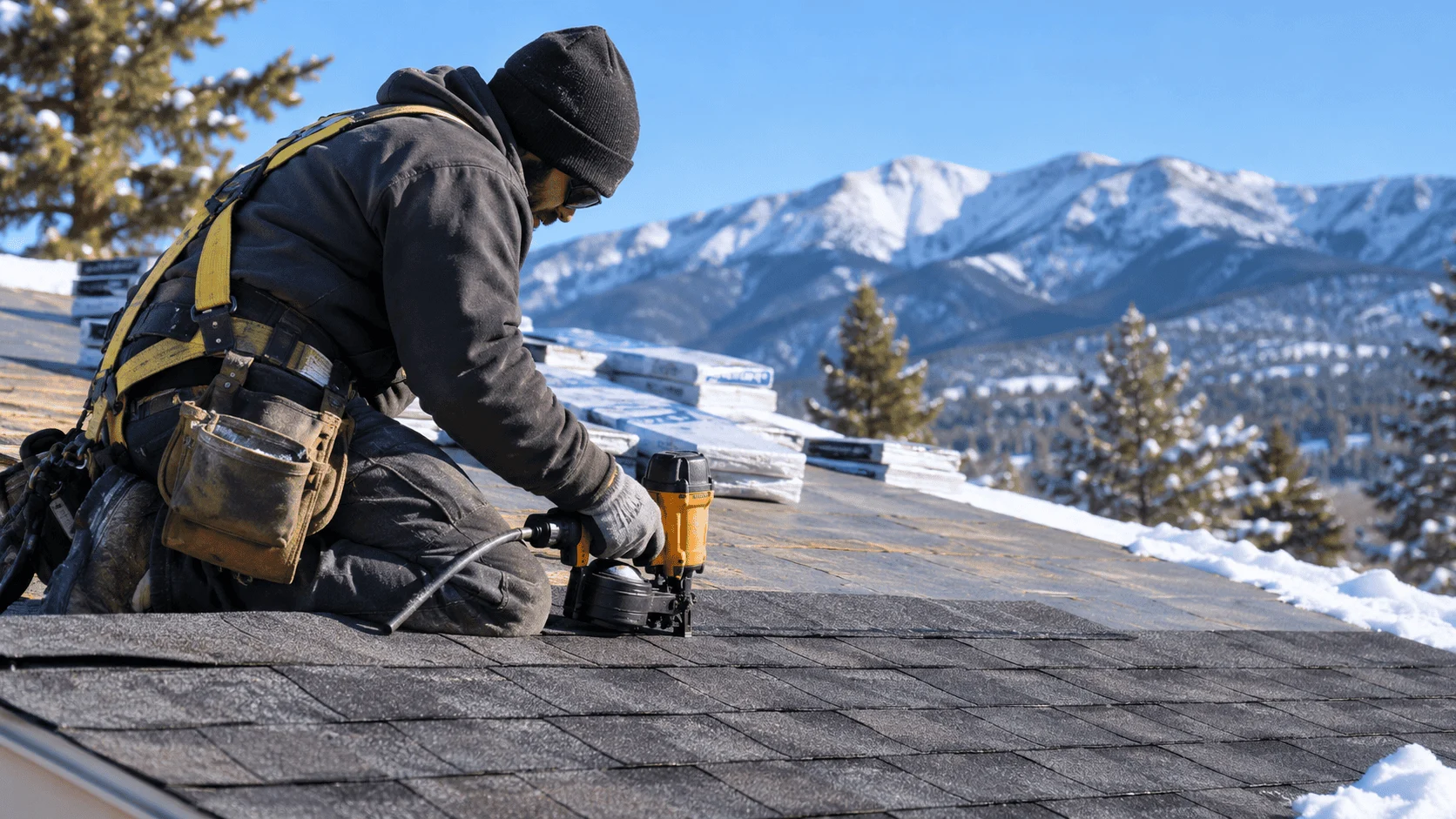
Yes, asphalt shingles can be installed during cold weather, but temperature affects how the materials behave.
Asphalt shingles are designed to withstand years of changing weather once properly installed. However, handling and installing new shingles in freezing temperatures is different from installing them on a warm summer afternoon.
Cold Shingles Are Less Flexible
Asphalt shingles become stiffer as temperatures drop.
This matters because roofing crews need to handle, position, and sometimes bend shingles during installation, particularly around ridges, hips, and other roof features.
When shingles become too cold, they can be more susceptible to cracking if handled improperly.
Roofing contractors may need to store materials in warmer conditions before installation and take additional precautions when working with them.
The exact requirements depend on the shingle manufacturer and product.
Shingles Need to Seal Properly
Most asphalt shingles have a factory-applied adhesive strip that helps bond overlapping shingles together.
During warmer weather, heat from the sun helps activate this adhesive. In colder temperatures, the sealing process can take longer.
That does not necessarily mean the shingles cannot be installed.
Some manufacturers provide instructions for additional hand-sealing or other cold-weather installation procedures. These steps help address the fact that the shingles may not seal naturally as quickly as they would during warmer conditions.
It is important to follow the instructions for the specific roofing product being installed.
Is There a Minimum Temperature for Roof Installation?
There is no universal minimum temperature that applies to every asphalt shingle.
Many manufacturers recommend special precautions when temperatures fall below approximately 40°F, but recommendations and installation requirements vary by product.
A temperature of 30°F does not automatically mean a roof cannot be installed, just as a sunny 45°F afternoon does not automatically mean conditions are suitable.
The condition of the roof surface, wind, moisture, material temperature, and manufacturer instructions all matter.
Colorado Springs Weather Can Actually Provide Winter Roofing Opportunities
One advantage of living along Colorado’s Front Range is that winter does not always mean weeks of uninterrupted freezing temperatures.
Colorado Springs often experiences stretches of sunshine and relatively mild afternoons between winter storms.
Those breaks in the weather can create opportunities for roof repairs and replacements.
However, a suitable roofing day involves more than looking at the afternoon high temperature.
Sunshine Does Not Always Mean a Dry Roof
A roof may look clear from the driveway while shaded sections still have frost, ice, or moisture.
North-facing slopes can remain colder and hold snow longer than south-facing sections of the same roof.
Roofing materials generally need to be installed over surfaces that meet the manufacturer’s requirements. Snow, ice, and trapped moisture can interfere with proper installation and create safety concerns.
That is why a sunny day following a snowstorm is not always an appropriate day to begin roofing work.
Wind Can Be Just as Important as Temperature
Colorado Springs homeowners know that winter wind can arrive with little warning.
High winds make handling roofing materials more difficult and can create unsafe working conditions, particularly on steep roofs.
Even when temperatures are acceptable, wind conditions may require a roofing crew to adjust its schedule.
A successful winter roof installation depends on the entire weather picture, not just the number on the thermometer.
What Happens If Your Roof Needs Work During a Snowstorm?
Not every roofing problem can be permanently repaired immediately.
If a roof develops a leak during a period of snow, ice, or dangerous winds, the first priority is protecting the home and preventing additional water intrusion where it is safe to do so.
Depending on the damage, a roofing professional may recommend temporary weather protection until conditions allow a permanent repair.
In other situations, a damaged section can be repaired without replacing the entire roof.
A full roof replacement may be necessary when damage is extensive, materials have deteriorated beyond practical repair, or the existing roof can no longer provide reliable protection.
The decision should be based on the roof’s condition, not simply the season.
Should You Wait Until Spring to Replace Your Roof?
Sometimes waiting is the right decision.
If a roof is aging but still performing well, scheduling a replacement during a more predictable weather season may make sense.
But if the roof has significant storm damage, recurring leaks, or deteriorated materials, postponing the work for several months may allow additional problems to develop.
There is no single answer that applies to every home.
A professional roof inspection can help determine whether a repair will address the immediate concern, whether temporary protection is appropriate, or whether replacement should be considered before spring.
Winter Roofing Is About Working With Colorado Weather
Colorado homeowners are accustomed to adjusting plans around the weather. We move outdoor projects when storms arrive, take advantage of sunny afternoons, and know that a clear morning does not guarantee a clear evening.
Roofing is no different.
Cold-weather roof installation requires careful material handling, attention to sealing requirements, appropriate jobsite conditions, and a willingness to wait when the weather is not cooperating.
For homeowners facing an unexpected roof problem in November, December, or February, the important thing to understand is that winter does not automatically eliminate their options.
A roof that needs attention deserves an evaluation, regardless of what month is on the calendar.